Saturday, April 7, 2012

Sunday, March 18, 2012
Tuesday, September 1, 2009
Leaving Life Like Harry Potter/R Kelly
To echo the feelings expressed in my "Part 1 Complete" post in July, I still can't believe how well everything came together this summer. My 12 weeks in Korea were a senior trip, study abroad, and summer job all rolled into one. Working for Hoyah Academy had its ups and downs- the staff there seemed to have good intentions, but they definitely didn't give me the number of hours they had promised back in May. Still, the positive aspects of teaching SAT this summer were plentiful. Working with high school students brought me back to my days as a secondary schooler, and I was able to get a taste of the idealism and relative innocence that accompanied that time. Teaching students about classic novels and U.S. history actually ended up teaching me why literature and history are so important, as the works and events I explained to my classes seemed so much more important and profound than when I first learned about them in high school. In a sense, teaching these ideas validated my high school and college educations, as it confirmed that my time in high school had presented all of the facts I needed to know to be an informed citizen, and my time in college had equipped me with the perspective and mind to be able to interpret and value these facts.
I had three primary goals for this trip:
1) To build up some savings so that I would be able to survive during my unemployed/minimum wage period
2) To hang out with friends in Korea
3) To see and experience Korea
All of these goals came to fruition, and even exceeded my expectations. Alas, my fourth goal of learning Korean will have to wait for another day.
A Best of List for future reference:
Best All-around Store: Homeplus

Homeplus was just two blocks away from my goshitel, and I ended up shopping there at least twice a week. Not only did they boast a grocery section with an abundance of samples and slashed prices after 7 pm everyday, they also sold clothes, electronics, umbrellas, and anything else you could possibly need for the lowest prices around. I recently found out it's primarily owned by British company Tesco, with a minority share held by Samsung.
Best Historical Site: Hwaseong Haenggung and Namhansanseong (tie)
The trip to Gyeongju was a blast, but mostly because it was a chance to get out of Seoul and also because of the company. I'd have to say Hwaseong Haenggung, which is right outside of Seoul, tops my list because of the vividness of the newly reconstructed building and the opportunity to make traditional Korean crafts, foods, and dress up in traditional Korean armor for less than $2 each. Namhansanseong isn't comprised of particularly beautiful buildings, but the way it was integrated into the mountains, the view it provides, and the 1700s town nestled in the center of the valley make this fortress a must-see.
Best "Bang" (room): Tossup
This category is too tough to call. While the PC-bang was a fun, cheap way to partake in the Korean national pasttime of Starcraft, the jjimjilbang was also a relatively cheap way to relax and get everything flowing again. And no trip to Korea would be complete without the noraebang, especially since the K-pop songs offered there are hardly as ubiquitous outside of the country.
Best Ddukbokki: The Lady in the Gangnam Dumpster
If you're ever at Gangnam station, to find "dumpster ddukbokki lady," you'll need to exit from Exit 7, make a right before the CGV movie theater, then make a left at the first street. The ddukbokki lady will be in a dumpster-looking apparatus which actually unfolds like a Transformer to become a food stand. I never met a ddukbokki I didn't like, but the slightly firm consistency of DDL's chewy rice cakes and her sauce which was a perfect blend of sweet barbequey sauce and chili paste elevated her ddukbokki to perfection.
Best Weekend Activity: Dr. Fish
I was tempted to say Lotte World, which was surprisingly fun considering it's just a big rip-off of Disneyland with some Korean elements thrown in, but Dr. Fish has to be the most memorable weekend activity for me. All-you-can-eat bread, fifteen minutes of tickle torture, and a pedicure that really rids your feet of dirt and callouses. All for only $1.80.
Most Serious Threat to Masculinity: Manbags

In Korea (and other Asian countries), many boyfriends will carry their girlfriends' purses. Yet a strangely high number of Korean males already have their own purses or manbags. This is bad enough in itself, but when a guy carries his girlfriend's purse in addition to his own, the result is a total invalidation of his masculinity.
I'll leave you with some parting shots of my home for 12 weeks:

Goodbye to the washroom where I'd brush teeth by hand
Or floss or wash my face, or do things I needed to do
The singular thing I just can't understand
Is why the place always smelled like kimchi mixed with poo

So long to the laundry room that helped me a lot
Whenever I needed to clean my work attire
I could dry my clothes quickly when the temperature was hot
But though I looked long and hard, I could not find a dryer

Farewell to the kitchen where I cooked all my meals
And ate my free rice, and sometimes kimchi and ramen
But using the stove could be a tiring ordeal
That made me long for the days when my kitchen had an oven
 Adios little shower with your water pressure so low
That made washing off unbelievably slow

I bid adieu to the water filter which spewed water so cold

And to my dark shoe cubby where those shoes could grow mold
 Bye bye to the trash cans, all lined up in a row
though what to dump in which can I never did know
For though I did learn to read the characters of Hangul
I never knew meanings, for I was a fool
 A final goodbye to my goshitel or closet
Give me a second to decide what to posit
For all the cool times, the hot times, and the cramped times too
All I can say is that I will miss you
Thanks to all the readers of this blog, and especially for the words of encouragement. Without that, I probably wouldn't have continued writing.
I have a feeling I'll end up in Korea again some day, and when that happens you can be sure this Korean look-alike will be reporting once again from a closet. Until then, good night.
I had three primary goals for this trip:
1) To build up some savings so that I would be able to survive during my unemployed/minimum wage period
2) To hang out with friends in Korea
3) To see and experience Korea
All of these goals came to fruition, and even exceeded my expectations. Alas, my fourth goal of learning Korean will have to wait for another day.
A Best of List for future reference:
Best All-around Store: Homeplus

Homeplus was just two blocks away from my goshitel, and I ended up shopping there at least twice a week. Not only did they boast a grocery section with an abundance of samples and slashed prices after 7 pm everyday, they also sold clothes, electronics, umbrellas, and anything else you could possibly need for the lowest prices around. I recently found out it's primarily owned by British company Tesco, with a minority share held by Samsung.
Best Historical Site: Hwaseong Haenggung and Namhansanseong (tie)
The trip to Gyeongju was a blast, but mostly because it was a chance to get out of Seoul and also because of the company. I'd have to say Hwaseong Haenggung, which is right outside of Seoul, tops my list because of the vividness of the newly reconstructed building and the opportunity to make traditional Korean crafts, foods, and dress up in traditional Korean armor for less than $2 each. Namhansanseong isn't comprised of particularly beautiful buildings, but the way it was integrated into the mountains, the view it provides, and the 1700s town nestled in the center of the valley make this fortress a must-see.
Best "Bang" (room): Tossup
This category is too tough to call. While the PC-bang was a fun, cheap way to partake in the Korean national pasttime of Starcraft, the jjimjilbang was also a relatively cheap way to relax and get everything flowing again. And no trip to Korea would be complete without the noraebang, especially since the K-pop songs offered there are hardly as ubiquitous outside of the country.
Best Ddukbokki: The Lady in the Gangnam Dumpster
If you're ever at Gangnam station, to find "dumpster ddukbokki lady," you'll need to exit from Exit 7, make a right before the CGV movie theater, then make a left at the first street. The ddukbokki lady will be in a dumpster-looking apparatus which actually unfolds like a Transformer to become a food stand. I never met a ddukbokki I didn't like, but the slightly firm consistency of DDL's chewy rice cakes and her sauce which was a perfect blend of sweet barbequey sauce and chili paste elevated her ddukbokki to perfection.
Best Weekend Activity: Dr. Fish
I was tempted to say Lotte World, which was surprisingly fun considering it's just a big rip-off of Disneyland with some Korean elements thrown in, but Dr. Fish has to be the most memorable weekend activity for me. All-you-can-eat bread, fifteen minutes of tickle torture, and a pedicure that really rids your feet of dirt and callouses. All for only $1.80.
Most Serious Threat to Masculinity: Manbags

In Korea (and other Asian countries), many boyfriends will carry their girlfriends' purses. Yet a strangely high number of Korean males already have their own purses or manbags. This is bad enough in itself, but when a guy carries his girlfriend's purse in addition to his own, the result is a total invalidation of his masculinity.
I'll leave you with some parting shots of my home for 12 weeks:

Goodbye to the washroom where I'd brush teeth by hand
Or floss or wash my face, or do things I needed to do
The singular thing I just can't understand
Is why the place always smelled like kimchi mixed with poo

So long to the laundry room that helped me a lot
Whenever I needed to clean my work attire
I could dry my clothes quickly when the temperature was hot
But though I looked long and hard, I could not find a dryer

Farewell to the kitchen where I cooked all my meals
And ate my free rice, and sometimes kimchi and ramen
But using the stove could be a tiring ordeal
That made me long for the days when my kitchen had an oven
 Adios little shower with your water pressure so low
That made washing off unbelievably slow

I bid adieu to the water filter which spewed water so cold

And to my dark shoe cubby where those shoes could grow mold
 Bye bye to the trash cans, all lined up in a row
though what to dump in which can I never did know
For though I did learn to read the characters of Hangul
I never knew meanings, for I was a fool
 A final goodbye to my goshitel or closet
Give me a second to decide what to posit
For all the cool times, the hot times, and the cramped times too
All I can say is that I will miss you
Thanks to all the readers of this blog, and especially for the words of encouragement. Without that, I probably wouldn't have continued writing.
I have a feeling I'll end up in Korea again some day, and when that happens you can be sure this Korean look-alike will be reporting once again from a closet. Until then, good night.
Sunday, August 30, 2009
Emphasized Education
The other day I was subbing for a US History class, explaining the details of the Civil War to a group of students. Most of them were obviously growing tired, listening but not completely focused. Then a student randomly asked what school I had gone to. "I went to Brown," I replied, and in a split second, the mood of the entire classroom took a 180 degree shift- eyes widened, ears perked, and heads leaned forward. There was a flurry of questions about Brown, what my test scores were, if I had any advice on getting in. Over the past eleven weeks, because of instances such as these, it's become increasingly apparent to me that the "prestige" of one's school matters more in Korea than it does anywhere else in the world.
A letter printed in a Korean newspaper a few weeks ago, written by a Korean student, described Koreans as "sustainers of the hagwon [academy] culture." Nothing could be closer to the truth. One of the major issues I've grappled with ever since I arrived in Korea is why Koreans place so much value on education, and it boils down to a self-perpetuating cycle. Students in Korea who graduate from top schools go on to land top jobs at the best companies. From my impressions, this seems to be a much more straightforward process than in the U.S., where graduating from a highly ranked school bears little to no correlation to one's "success" in life. And it seems to be this way in Korea only because it's become so engrained in the culture- students believe it, so they work hard, employers believe it so they hire accordingly, and parents believe it so they encourage (and often push) their kids to study hard. In the Korean system (within the country, at least), the education-based system runs like clockwork.
I've considered other factors as well, and they undoubtedly played some part in the shaping of the education culture. Even back in the Joseon dynasty, the yangban (or scholars) were considered an elite group, in part because of the emphasis on education found in Confucianism. And when Korea transformed itself from a developing nation into a highly modernized nation, education was crucial in that transformation. An educated populace would no longer live in pre-World War II poverty, but would be able make advancements in technology and living conditions, thereby pushing Korea into "modernity." Yet it seems that the only thing sustaining Korea's education culture in the present is this unwavering belief in the importance of education, and if Koreans were to stop believing in this importance, it would likely disappear.
Hagwons (or academies) represent a major sub-area of education in Korea. Some of my SAT students have told me that they had other hagwons for subjects besides the SAT, like math, art, etc. Jihoon told me he went to hagwons for English, math, and science, Janice has related stories about going to an English hagwon as a child, memorizing song after song, and one of my fifth grade students told me that she attended hagwons all day until 11 pm for almost the entire summer. Having only attended one institution even close to a hagwon during my childhood (and it was an SAT academy whose intensity was not even close to the intensity of academies here), I was a bit taken aback by the ubiquity of hagwons in students' lives. I was inclined to feel sorry for my students who would tell me stories of their non-Korean friends back in the states enjoying carefree summers while they spent their vacations learning and training.
And going to a hagwon doesn't just mean going to classes, there's also the accompanying hours of homework everyday. I was, to put it mildly, shocked when told during training to assign my students an hour of homework every night. A student taking three subjects would then have at least three hours of homework a night just for SAT hagwon, in addition to the five hours of classes they would have to sit through everyday, all during their summer vacations! And my jaw dropped when I discovered that for SAT Reading classes, teachers were required to have students memorize 50 vocabulary words everyday. That means that if a student were to come to all 55 days of SAT classes, he would have had to memorize 2,750 words over the course of a summer. If that weren't enough, one parent actually called the academy to complain that teachers weren't assigning enough vocab words! I've often questioned whether this "Memorize, memorize, memorize" policy, which appears in other hagwon classes as well to a degree, really works or if it's just a placebo to placate overzealous parents. Despite the many ill effects of hagwon culture, however, there are a number of factors countering the idea that hagwon life is just a prison.
For one, hagwon students make their own fun. Janice's mom, who teaches at an English hagwon, told me that hagwons are "like playgrounds" for students, and after hearing that I began to view things in a completely different light. True, the students did have to sit through lessons and complete homework, but they made friends with each other and sometimes made friends with teachers. A group of students in one of my classes would regularly go to a PC bang [PC room] after class to play Starcraft with each other, and another class all went out to take sticker pictures together. In contrast to the extreme alternative of two or three months of summer spent sitting around at home wondering what to do, going to hagwons and hanging out with friends seems quite bearable.
Another positive aspect of hagwons is the way it benefits spoiled children. Taking classes at a hagwon is certainly not cheap- some of the teachers have said classes at my academy are about 30-40,000 won/hour and private tutoring is over 100,000 won/hour- and only middle to upper class families can afford these extra classes. In class it's pretty obvious which students are spoiled and used to getting their way, and I can only imagine what their lives would be like if they were not in classes- if the money being spent on said classes were being spent on things the child wanted, like games, clothes, etc.
Even in light of these positive aspects, I still have reservations about hagwon culture. What happens to kids who never have time to play outside or make up things to do because they're "learning" all the time? To be sure, this is a problem for many American children too, but not quite to the same extent. Furthermore, what are the effects of a hagwon system that equates learning with memorizing? Where's the room for creativity and original thinking, and what about the burn-out factor? Granted, most of my Korean friends turned out pretty well, but I can't help but feel that some kids are feeling the deleterious repercussions of the system's flaws.
An additional flaw in the system is that, in my opinion, hagwons don't actually help every student. What I mean is that just because a particular student attends an academy, he won't necessarily have a distinct advantage over someone who didn't attend an academy. For many students, the repeated memorization and daily learning really do help to shape and sharpen their minds. For others, however, all the intensity (and sometimes monotony) of hagwons does is turn them off to whatever subject they're studying. Some students may get bored of studying, some may be burnt out, and others may just have strengths in other areas, but for all of them, being forced to go to hagwon does next to nothing for their educations while they could be out exploring the areas they would really excel in.
So what's to be done about this predicament? Frankly, I'm not sure anything can actively be done. I know of a number of people/hagwons trying to reform the system but from my impressions they've had limited success thus far. As I said before, what it really comes down to is what kind of value Koreans place on education and hagwons- if they choose to deemphasize them, then they will lose importance, but only then.
Yet I've found myself wondering how skewed the Korean view of education really is. After all, don't most people in the US hear what college you went to and what you majored in and instantly (consciously or not) form a preconceived notion of you, your intelligence, and your abilities? In some ways, Koreans just take this unfortunate situation and seize the opportunity to elevate their own and their childrens' status in the eyes of others and of society. And until either society or attitudes change, Korean students will continue to be pushed through the metaphorical strainer as everyone else holds their breaths, waiting to see who will emerge unscathed with a highly sought after Ivy League degree attached to his or her name.
Yet I've found myself wondering how skewed the Korean view of education really is. After all, don't most people in the US hear what college you went to and what you majored in and instantly (consciously or not) form a preconceived notion of you, your intelligence, and your abilities? In some ways, Koreans just take this unfortunate situation and seize the opportunity to elevate their own and their childrens' status in the eyes of others and of society. And until either society or attitudes change, Korean students will continue to be pushed through the metaphorical strainer as everyone else holds their breaths, waiting to see who will emerge unscathed with a highly sought after Ivy League degree attached to his or her name.
Thursday, August 27, 2009
Beijing Welcomes You... and You and You and You and a Hundred Thousand Other People Too


After breakfast, we crossed the street to the Temple of Heaven complex, where the Emperor would go through temples from the south to the north to pray for a good harvest, representing his ascent to the heavens. Being sacrilegious, we took the north to south route.

reenacting the Beijing Huan Ying Ni music video


sliding down national treasures seems to be another favorite Asian pasttime
Following the Temple of Heaven, we went to China's national protest stage- Tiananmen Square- where it seemed every Chinese person had also decided to visit. The square, which felt at least as large as a football field, wasn't jam-packed but it was filled with tourists. Unfortunately, the main Tiananmen building as well as the Monument to the People's Heroes were surrounded by scaffolding, as they were being refurbished for the 60th anniversary of the PRC this October. Also unfortunately, we weren't able to see Mao's embalmed body as we would have had to wait behind the hundreds of people already waiting.

You didn't really want to see Mao's face anyway, right?
After pushing our way through the Tiananmen archway, we found ourselves in the pathway leading up to Forbidden City, the same pathway the Emperor used to traverse (actually, be carried along). That day it was filled with hundreds upon hundreds of tourists and littered with trash instead.

 It's actually pretty sad that a place which used to be so important and well-preserved is now a veritable dump.
We were especially lucky to have Rebecca around to guide us through the maze which is Forbidden City, as she not only provided historical information, she also showed us the most expedient path through the place.


The palace is quite an awe-inspiring production, with its towering walls, gold plated tiles, and majestic staircases. I almost remarked that, unlike Korean palaces, Forbidden City would have been extremely difficult to invade until my Chinese friends reminded me that the British and French actually occupied the palace during the Second Opium War.
Whoever said that Korean palaces and temples all look the same has evidently never been to Forbidden City. While the first few structures were amazing to behold, the law of diminishing returns eventually kicked in, and once we got to the third or so building which looked exactly the same as the first two, I really couldn't care less.

People kept swarming to take pictures of the insides of the buildings, even though most of the time there was nothing more than a few chairs inside. I got pushed up against more hot, sweaty bodies that day than I ever thought possible.
After the monotony of the palace structures, the clock museum inside Forbidden City was an unexpected highlight. The clockmakers of the 17 and 1800's crafted some incredibly elaborate and sophisticated timepieces, which were all the more amazing considering the fact that they had no computer technology to aid them, only gears and sprockets.
One of the clocks featured hopping birds and flowing rivers, another an elephant which would pull a chariot along a track. Yet the most impressive clock was one which contained a seated figure which would actually write out various Chinese characters onto a small piece of paper whenever the clock chimed.

One of our latter stops in Forbidden City was the concubine quarters. These were behind the largest wall in the entire complex (as seen below), apparently to keep an angry/jealous empress from getting in and starting a girlfight.

These pots actually had a two-fold purpose, neither of which involved playing hide-and-seek: one, they could be filled with hot water to provide warm spots during the winter, and two, they could be filled with any sort of water to be used in case of fire, which the residents of FC were constantly afraid of
At long last, we emerged from the back gate of Forbidden City, from which we traveled to a hutong, an alley-sort of street which is historically where Beijingers have lived. Nowadays, they seem to be catering more towards foreign tourists, with restaurants offering Western food and souvenirs.
Next, we had dinner at a place called "Jing Wei Lou" near our hotel, which I would strongly recommend to anyone visiting Beijing. While the flour dishes like the dumplings and green onion pancakes were average, the toffee-glazed sweet potatoes should be as much of a must-eat as Peking duck.


donkey meat tasted slightly of liver

kung pao chicken, vegetables, and toffee-glazed sweet potatoes
I'm really thankful we had sunny weather and clear blue skies that weekend in Beijing- apparently both are relatively rare in the city- and it was great to be able to see the famed capital for myself. Nevertheless, by the time I landed back in Seoul Monday, I was glad to be back in the clean, modern, [mostly] efficient, and more compact city. Beijing certainly boasts power, grandiosity, great bargains, and great food, but it also suffers from its huge size, overcrowding, brusque attitudes, and relative inefficiency. It seems to me that Korea's small size, which I had previously seen as a negative aspect, is actually a boon. People in Korea seem to be united by various strands of Korean culture (including, but not limited to, Kpop, dramas, hagwons, and Starcraft), while China is home to so many people from varied racial, economic, and cultural backgrounds that it's much more difficult to pinpoint definitive commonalities linking Chinese people together.
Wednesday, August 26, 2009
Asian Vacation Part II
The Mutianyu portion of the Great Wall is a little more out of the way than other parts of the wall, but it is also the area Bill Clinton visited during his China trip, so it's not altogether removed from civilization either. When Clinton came, he went up to the wall via an enclosed trolley car. While acrophobic Sutong wanted to follow Clinton's path, Vivian and I preferred the ski lifts and convinced him it would be more fun.

I had pretty low expectations for the Great Wall- after all, I'd seen plenty of walls in my life. Perhaps because of this, the wall ended up being my favorite part of the trip. In real life, the fortification was jaw-droppingly beautiful, and exploring the watchtowers and climbing the giant steps were adventures in themselves.


我看不懂中文


Thankfully, the steps weren't actually this absurdly challenging to climb, though it felt like it at times

Some of the wall's steps were so large and at such a steep incline that I had the sensation of feeling like a baby climbing up a giant staircase.
Apparently the wall has divided the countryside for so long that the vegatation on one side is distinctly different from that on the other.

The best part of the wall was the section past the "No admittance" sign, where someone had graciously carved out a narrow, narrow path through the overgrown shrubbery to the ruins of a wall watchtower. It was in that section which had been undisturbed by modern-day meddling, where I felt I could experience the "real" wall. I should note that many portions of the Great Wall have been restored, so it seems Korea is not alone in perfecting the great art of rebuilding and replicating.


yes that is Sutong's shoulder, and yes he is carrying a purse

Once we had finished traversing the wall, we rode wheeled toboggans along a giant metal slide all the way down the mountain.
"Asian vacations," as opposed to American vacations, require one to fill one's day with as much as is physically possible and then some, so immediately after the Great Wall, we rented bikes and rode over to visit the famed Beijing universities.
Being virtually ignorant of the Chinese university system, I honestly didn't think Qinghua and Beijing Universities were such a big deal, but according to Sutong they're like the MIT and Harvard of China, respectively. Both schools were teeming with tourists snapping pictures like crazy, especially at each of the main entrances. I was especially struck by the extensive gardens on each campus- if I hadn't known better I'd have thought the colleges were national parks instead.

Qinghua main field

The famed South gate of Qinghua, where countless little kids were taking pictures in hopes of someday attending the school

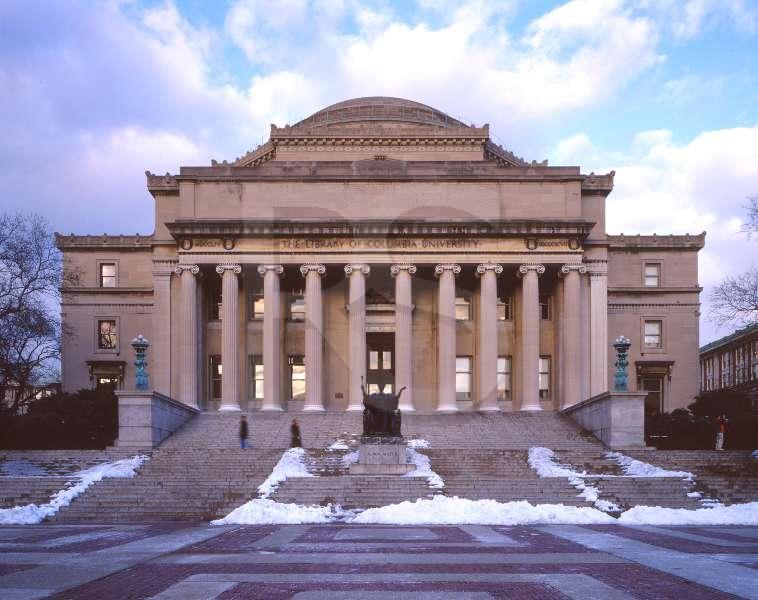
A recently constructed building at Qinghua, made entirely from materials imported from the U.S. We overhead a tour guide saying that they were trying to replicate Columbia's library.
Vivian also got yelled at for standing on this lawn, as grass in China is not to be stood upon.

Lake at Qinghua

a classroom building at Beijing University- Sutong said most of the students at Beijing U are working to go to grad school in the US and eventually become professors there
Rather uncoincidentally, major American tech companies like Google, Microsoft, and Sun have set up divisions right across the street from Qinghua, making it convenient to recruit the brilliant techies the school churns out.
For dinner, we stopped at Quan Ju De Peking Duck restaurant on the first floor of the Microsoft building. Quan Ju De was one of two original Peking Duck restaurants, and has now become so successful (from feeding millions of hungry tourists, no doubt) that they've built chains throughout the city and are even publicly traded.

The meal was a fairly elaborate affair- after the waitress brought our cooked duck out to our table, the chefs meticulously sliced each part of the animal. First, the best skin was served, followed by a few plates of skin and meat, the head and breast, and finally a soup made from the duck bones.

 Even though our servers were far from satisfactory and lied to us a number of times, that didn't detract significantly from our enjoyment of the food. I'd say the duck lived up to the hype, and each bite was like an explosion of oil in my mouth.
 Tuesday, August 25, 2009
And now for a change of scenery
Last Friday I finished my last classes and said goodbye to my English class of future Parliamentarians rather unemotionally before rushing off to the airport in order to catch my flight to Beijing. The whole trip to China is such a blur and I went through it in such a sleep-deprived state that sometimes I question whether it really happened.
I touched down in the Beijing airport around 8 pm and followed Sutong's directions to the hotel he had made reservations at. I had been hoping that my one year of Mandarin would instantly return to me the second I entered the country, but alas, virtually none of it did and I had to resort to mixing English and Chinese phrases which were met with confounded looks by those I attempted to speak to.
Upon hitting the Beijing streets, I was amazed at how refreshing it was to see dirty streets and poor workers eating on the side of the road. I remember when I first arrived in Seoul I asked Janice where the ghetto areas were, and she said the closest thing would be some rundown houses near the N tower in the middle of the city. I've found that Seoul really is lacking in the "ghetto" department, aside from the goshitel I had originally planned on staying in, which was inhabited by poor migrant workers.
And in actuality, the Hou Hai area where our hotel was located in Beijing was ghetto only in comparison to Seoul- it's home to Chinese celebrities and the Beijing elite as well. Once I managed to find the hotel and get settled, Sutong, his girlfriend Vivian, and I set out to the lakeside where a number of jazz-club like establishments were situated (and playing songs that were popular in 2006 Kyrgyzstan like "Gasolina" and "Boro Boro")


Sometime during the course of our conversation, the topic of Koreans came up. Vivian explained that a popular Chinese slang word is a word that sounds like "dee-yeah," which is hard to define in English, but usually means "cute" in a good or a bad way- i.e. whiny Korean voices, couples wearing matching clothes. Apparently, it also applies to Taiwanese people as well- one Taiwanese singer on the radio had a "dee-yeah" voice.
Another slang word introduced to me was the word "niu," which literally means cow, but which figuratively means "cool."
For my first meal in Beijing, I had the chance to try authentic Chinese zhajiang mian in its country of origin. Strangely, I've heard both Koreans and Chinese declare that their country created zhajiangmian/jajjangmyeon and that the other country could not possibly have the same dish. Sometimes I feel like Asia is one big high school and each country is its own little social clique.
The salty Chinese zhajiang mian was initially much better than the sweet Korean jajjangmyeon, but after a few bites it felt like a stroke waiting to happen.


the view outside our hotel room

one of the lakes by our hotel
We had originally planned to get up at 5:30 the next morning to head to the Mutianyu section of the Great Wall. That didn't happen, so at 8:30 we departed for the wall. On our way through the Beijing countryside, we stopped at a restaurant where you could catch and then immediately eat your own fish.


Sutong actually caught our fish- I just pretended like I was helping

A pretty cow place to eat
To Be Continued
Subscribe to:
Comments (Atom)